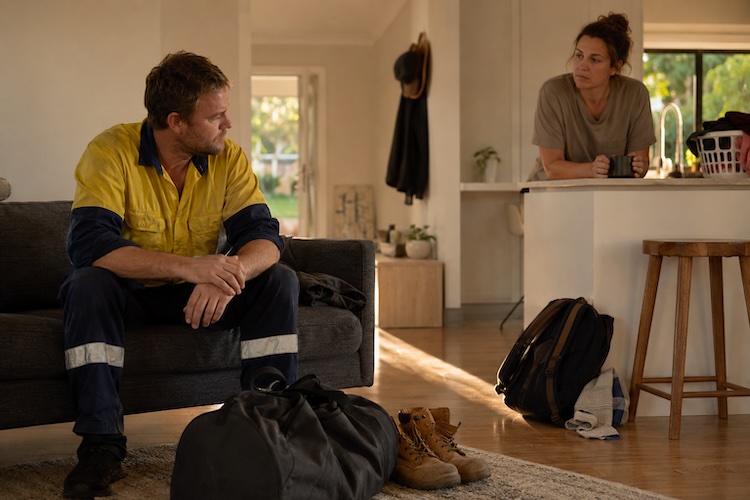
There is a familiar picture of successful co-parenting after separation.
The parents stand together at the school concert. They celebrate birthdays as a family, chat comfortably at changeover, sit near one another at sporting events and perhaps even share photographs that demonstrate how well they have managed to remain friends. The relationship ended, but the adults have put their differences aside for the children.
Sometimes that picture is completely genuine. Some former partners eventually establish warm, easy relationships in which shared events and frequent communication feel natural rather than difficult. Their children may benefit enormously from it.
The problem begins when this particular version of post-separation life becomes the standard by which all separated parents are judged.
Being visibly friendly is not the same as providing good co-parenting. Attending events together is not inherently healthier than attending separately. Frequent communication is not necessarily better than limited but reliable communication, and the ability to stand smiling beside a former partner tells us surprisingly little about what happens psychologically before, during or after that interaction.
Sometimes what looks like excellent co-parenting from the outside is actually an elaborate performance of being okay.
And sometimes maintaining that performance costs more than anybody else can see.
The social ideal of the “good divorce”
Separation is often discussed as though there are two broad ways to do it.
There is the destructive separation: hostility, arguments, children caught in the middle and parents who cannot communicate. Then there is the mature separation: former partners remain friendly, communicate openly, attend children’s events together and demonstrate that whatever happened between them has been put aside.
Understandably, most people prefer the second picture.
The difficulty is that it combines two things that are not necessarily the same: low conflict and interpersonal closeness.
Children generally benefit from being protected from destructive conflict between their parents. That does not mean they necessarily benefit from their parents maintaining a close personal relationship with one another.
Two former partners can have very little contact and very little conflict. They can communicate primarily in writing, manage their households independently, attend some events separately and still provide their child with consistency, affection and security.
Conversely, two parents can appear extremely cooperative while one or both are continually suppressing distress, resentment or anxiety in order to maintain the appearance that everything is fine.
What matters is not simply what the arrangement looks like.
It is what the arrangement produces.
When co-parenting becomes performative
There is a useful way of thinking about what can happen here: performative co-parenting.
This does not necessarily mean parents are deliberately pretending or trying to deceive anyone. More often, they have absorbed an idea of what good separated parenting is supposed to look like and begin measuring themselves against it.
Joint birthdays are good. Sitting together at school events is good. Being flexible is good. Frequent communication is good. Remaining friends after separation is particularly good.
Once these behaviours acquire moral value, declining them can easily be interpreted as evidence of something less admirable. A parent who prefers separate birthday celebrations may appear bitter. Someone who sits elsewhere at a school event can look immature. A parent who prefers written communication rather than phone calls may be described as difficult or uncooperative.
The behaviour itself tells us very little.
Sitting together at a school concert might reflect genuine ease between two former partners. For somebody else, the same two hours might involve considerable anticipatory anxiety, emotional suppression during the event and a significant period of recovery afterwards.
From the auditorium, both arrangements look identical.
Psychologically, they may be nothing alike.
Performative co-parenting begins when maintaining the appearance of harmony becomes a goal in itself, rather than harmony being the natural consequence of an arrangement that genuinely works.
“For the children” can become difficult to question
Few phrases carry more moral weight in separated parenting than “for the children.”
Parents are rightly encouraged to consider their child’s needs rather than using parenting decisions to continue adult disputes. Children should not be recruited into conflict, asked to take sides, used to deliver messages or made responsible for a parent’s emotions.
But “for the children” can also become a phrase that ends rather than begins a conversation.
Surely you can sit together for two hours for your daughter.
Can’t you both put everything aside for his birthday?
You don’t have to like each other. Just be civil for the kids.
Sometimes that is entirely reasonable advice. Separation inevitably involves uncomfortable moments, and protecting children cannot mean avoiding every interaction that produces difficult feelings.
The more useful question is what kind of discomfort is involved.
There is a difference between manageable discomfort and an arrangement that repeatedly destabilises someone in ways that affect their functioning or parenting. Feeling awkward around a former partner is not, by itself, a reason that parents can never occupy the same space. But repeatedly becoming highly distressed before contact, struggling significantly afterwards or finding that interactions continually reactivate damaging relationship dynamics deserves more consideration than simply being told to put differences aside.
The question is not only, “Can I get through this?”
It is also, “What does getting through this cost, and does this arrangement genuinely benefit our child?”
Children experience more than the event
Adults can become very focused on the visible moment.
Both parents attended.
Nobody argued.
Everyone smiled for the photograph.
Success.
But children experience considerably more than the event itself. They may notice the parent who becomes unusually quiet beforehand, tension that adults believe they are concealing, irritability afterwards or the emotional withdrawal of someone who has used most of their capacity getting through the interaction.
Children are often sensitive to atmosphere even when they do not understand its source.
This does not mean parents should organise family life around avoiding difficult emotion. Children can also benefit from seeing adults tolerate discomfort, regulate themselves and behave respectfully towards someone with whom they have a complicated history.
The calculation simply needs to include more than whether everybody managed to behave appropriately for ninety minutes.
A parent who attends separately and remains emotionally available afterwards may sometimes provide more stability than one who performs togetherness successfully and spends the following day recovering from it.
Civility and closeness are different things
One of the most useful distinctions in separated parenting is between civility and closeness.
Civility means not using a child as a weapon. It means sharing necessary information, respecting parenting arrangements, avoiding unnecessary hostility and allowing the child to love the other parent without making them responsible for adult feelings.
Closeness is something else.
Closeness involves personal conversation, shared celebrations, physical proximity, frequent contact, emotional familiarity and perhaps an ongoing friendship.
Children may benefit greatly from civility.
They do not necessarily require closeness between their separated parents.
This distinction becomes particularly important when the relationship ended in circumstances that significantly damaged trust. Betrayal, coercion, prolonged hostility, deception or a highly destabilising separation can leave one person entirely capable of behaving respectfully while having no desire for an ongoing personal relationship with the other.
That does not automatically make them a poor co-parent.
It may simply mean that the parenting relationship needs different boundaries from the romantic relationship that preceded it.
Being present together doesn’t mean being together
There is also considerable territory between friendship and complete avoidance.
Separated parents can attend the same school concert without sitting together. They can both watch a child’s sporting event without arriving together or making conversation. They can attend a graduation, performance or important milestone without presenting themselves as a family unit.
This middle ground can be easily overlooked.
The choice is not always between “we do this together” and “one of us cannot be there.”
Sometimes both parents can be fully present for the child while maintaining considerable distance from one another.
That distinction becomes increasingly important as children grow older. A young child’s events may be largely organised by adults, but older children and adolescents increasingly have views about who they want present at performances, graduations, birthdays and other milestones.
Healthy boundaries should not gradually become a system in which the child’s important experiences must always be divided around the adults.
Where it is reasonably possible, parents may need to develop the capacity to share a space without sharing a relationship.
Being present for the same child does not require being present as a couple, a friendship or a family unit.
Sometimes “being mature” means suppressing what is real
Separated parents can become extremely skilled at performing normality.
They smile, make small talk, stand together for photographs and behave in ways that reassure extended family, teachers, other parents and perhaps the children themselves that everything is fine.
Then one parent goes home and falls apart.
This does not automatically mean attending together was a mistake. Human beings regularly do difficult things for people they love.
The concern arises when emotional suppression becomes the permanent model.
A parent repeatedly tells themselves that being affected means they are bitter, immature or unable to move on. Rather than asking whether a different arrangement would work better, they become increasingly skilled at concealing the cost of the existing one.
Eventually, they may even receive praise for it.
You two co-parent so well.
It’s amazing that you can still do things together.
The kids are so lucky.
The praise can make the arrangement harder to question because changing it now appears to mean moving backwards.
But appearing comfortable and actually functioning well are not the same thing.
Boundaries can be healthy, but they can also be misused
There is an important qualification here.
Not everything described as a boundary is necessarily healthy.
A parent can use the language of boundaries to justify refusing reasonable communication, withholding important information, making changeovers unnecessarily difficult or excluding the other parent from significant aspects of the child’s life.
Similarly, avoiding every shared space because seeing a former partner produces uncomfortable feelings may eventually place an unreasonable burden on the child.
A useful boundary governs your own participation and access. It does not automatically give you the right to control the other parent’s relationship with the child.
For example, choosing not to sit beside a former partner at a school concert is a boundary. Attempting to prevent them from attending because their presence makes you uncomfortable is something different.
Choosing email as the preferred channel for routine parenting communication may be a boundary. Refusing to provide important information because you do not want contact is not.
This distinction matters because good separated parenting requires two things that sometimes pull in opposite directions: protecting appropriate adult boundaries while preserving the child’s freedom to have a meaningful relationship with both parents where it is safe to do so.
Neither should automatically erase the other.
Good co-parenting doesn’t require emotional access
Separation creates an unusual kind of relationship. Two people may no longer have a personal relationship with one another while continuing to share important responsibilities for many years.
That does not mean the former partner retains the same access they once had.
They may no longer be entitled to immediate responses, personal information, informal conversation or emotional availability simply because they share a child.
Parenting information is different.
Medical needs, important school matters, changes affecting care and other genuinely relevant information need a reliable pathway between households. But there is a significant difference between access to necessary parenting information and access to the other parent as a person.
Recognising that difference can be liberating.
It allows separated parents to stop asking, “How much contact should good co-parents have?” and instead ask, “What level of contact allows us to meet our parenting responsibilities well?”
For some former couples, the answer will be considerable.
For others, surprisingly little may be required.
Predictability can sometimes matter more than flexibility
Flexibility is another quality strongly associated with good co-parenting, and often for good reason. Children’s lives do not always fit neatly into parenting schedules, and rigid adherence to arrangements can create unnecessary difficulty.
But flexibility has costs when every variation requires renewed negotiation.
A highly flexible arrangement between parents who trust one another may reduce stress. The same arrangement between parents whose communication repeatedly becomes difficult can create constant uncertainty and new opportunities for conflict.
In those circumstances, predictability may be more valuable.
Knowing when changeover occurs, who is responsible for transport, how holidays are divided and which ordinary decisions each parent can make independently reduces the number of occasions on which the former relationship needs to be reactivated.
Sometimes structure is not evidence that parents cannot cooperate.
It is the thing that allows them to cooperate successfully.
You don’t have to prove that you’ve moved on
Perhaps one of the strongest pressures behind performative co-parenting is the belief that closeness demonstrates recovery.
If someone no longer wants unnecessary contact with a former partner, others may assume they are still angry. If they prefer separate celebrations, perhaps they have not moved on. If being around the other parent remains emotionally difficult, maybe they simply need to “get over it.”
Sometimes unresolved emotion does contribute to rigid or punitive boundaries, and being honest about that matters.
But emotional recovery does not have to culminate in friendship.
A person can accept that a relationship ended, build a meaningful new life and remain completely committed to their child while deciding that closeness with their former partner is neither desirable nor necessary.
Moving forward does not require becoming comfortable with every person or situation associated with the past.
Nor does healing have to be demonstrated publicly through proximity.
The measure is stability, not appearance
There is no single correct model of separated parenting.
Some former couples eventually become genuine friends. They communicate easily, celebrate milestones together and move flexibly between households. If that arrangement is comfortable and stable, there is no reason to make it more distant.
Others function better with clear boundaries, predictable arrangements and relatively little personal interaction.
The mistake is assuming that the first arrangement is psychologically healthier simply because it looks warmer.
A better measure is what the arrangement actually produces.
Does important information reach both parents? Are arrangements reliable? Can the child love both parents without feeling disloyal to either? Are they kept out of adult conflict? Can both parents attend important moments where appropriate without requiring the child to manage their emotions? Does communication solve practical problems rather than repeatedly create emotional ones? Are the parents sufficiently regulated and available during their own parenting time?
Those questions tell us far more about the quality of separated parenting than whether two adults sit beside one another at the school concert.
Good co-parenting may not look like co-parenting
Perhaps we need a broader picture of what successful separated parenting can look like.
It can look like two former partners genuinely becoming friends. It can look like warm conversations at changeover, joint birthday celebrations and shared Christmas mornings.
But it can also look like two people who rarely speak, communicate respectfully when necessary and independently provide loving homes for the same child.
It can look like separate celebrations.
It can look like both parents attending the same event from different parts of the room.
It can look like boundaries other people do not understand.
And, over time, it may change. What is emotionally overwhelming during the first year after a difficult separation may become manageable several years later. Boundaries can evolve as people recover and children grow.
The important distinction is whether those boundaries create stability or are being used to punish, control or exclude.
Good co-parenting is not a performance of how thoroughly two adults have overcome their separation. It is the ongoing work of creating conditions in which their child does not have to carry its emotional consequences.
Sometimes that involves learning to be comfortable together. Sometimes it means accepting respectful distance. Often it involves finding a workable place somewhere between the two.
Children do not need evidence that their parents can still act like a family.
They need evidence that the family they have now is stable enough to hold them.