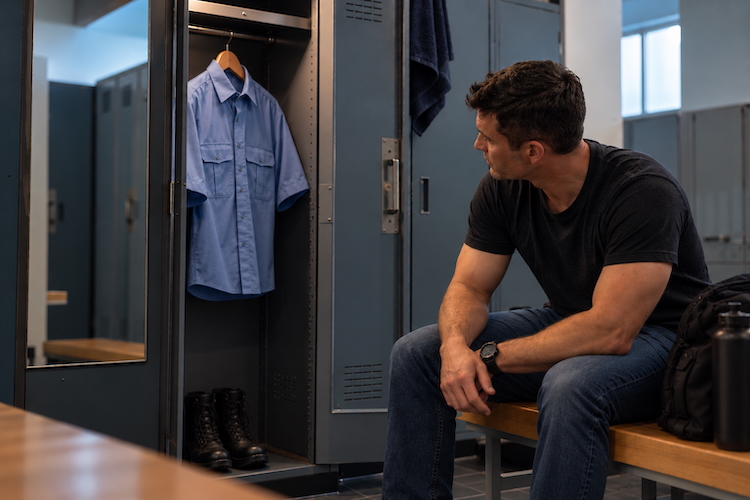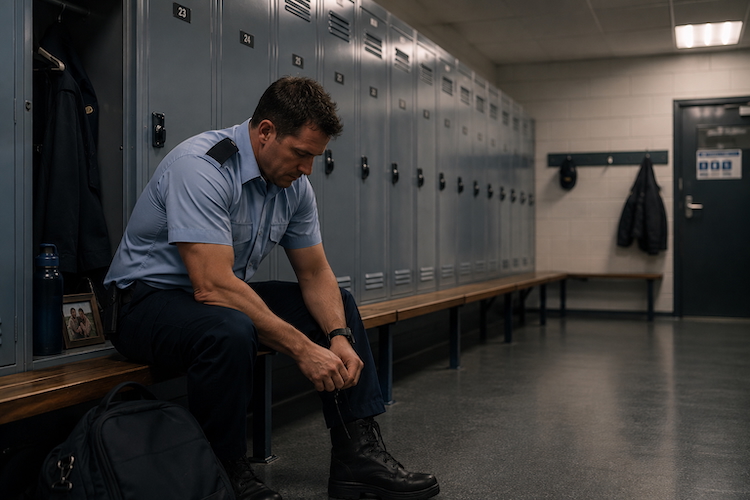
Why ordinary conversations can be different when people know you’re a police officer.
Being introduced to someone new can take a predictable turn when they discover you’re a police officer.
Sometimes they tell you about the fine they received last week. They might explain why they thought it was unfair, ask what you think of the officer who issued it, or offer their opinion about policing more generally.
Sometimes curiosity takes over.
“What’s the worst thing you’ve ever seen?”
And when people know you a little better, the conversation can change again. They might tell you about antisocial behaviour in their street, someone they suspect is dealing drugs, a troublesome neighbour or an issue frustrating the local community.
Then comes the question:
“What are you going to do about it?”
Usually, none of this is intended badly. People are making conversation, expressing frustration, being curious or speaking to someone they believe might understand a problem better than they do.
But collectively, these interactions reveal something unusual about policing.
Being off duty does not necessarily mean being experienced by other people as off duty.
When your occupation enters the conversation
For most people, telling someone what they do for work provides a little information about them. It might generate a few questions before the conversation moves elsewhere.
Policing can be different because almost everyone already has some relationship with the occupation.
They may have received a fine. They may have called police during an emergency. They may have had an experience they thought was handled well or badly. They may hold strong views about crime, laws, courts or policing itself.
So when someone discovers that the person standing beside them at a barbecue is a police officer, all of those experiences and opinions suddenly have somewhere to go.
“I got pulled over last month…”
The officer wasn’t there.
“Police didn’t do anything when…”
They weren’t involved in that either.
Yet simply because of their occupation, they can find themselves explaining, defending or representing decisions made by other officers, other stations or a much larger organisation.
The person may have arrived as a friend, neighbour, parent or partner.
But the occupation has entered the room with them.
When one role follows you into another
We all occupy multiple roles. The same person might move through a day as a police officer, parent, partner, friend, teammate and neighbour. Usually, changes in environment help us transition between them. Leaving work, changing clothes, arriving home or meeting friends helps one role recede while another becomes more relevant.
Psychologists and organisational researchers sometimes describe experiences, expectations or behaviours from one area of life carrying into another as role spillover.
For police, there can be an interesting social version of this: sometimes it is other people who bring the work role back into an off-duty interaction.
The officer may have finished work. They may have removed the uniform and mentally moved into another part of their life. But a conversation about a speeding fine asks for an opinion as a police officer. A question about a disturbing incident asks them to access their occupational experience. A neighbourhood problem can implicitly ask them to become professionally responsible for something while standing at a barbecue.
The officer has gone off duty, but the people around them can keep putting the role back on.
One person’s curiosity can be another person’s memory
Perhaps the clearest example is a question many police officers will recognise:
“What’s the worst thing you’ve ever seen?”
From the perspective of the person asking, this can be genuine curiosity. Police officers encounter parts of life most people rarely see, so wanting to understand what that is like is not unreasonable.
But there is an asymmetry hidden inside the question.
The person asking may be looking for an interesting story.
For the officer to answer honestly, they may have to retrieve a memory involving a fatal crash, suicide, violence, serious injury, an abused child or somebody experiencing the worst day of their life.
One person’s interesting question can be another person’s traumatic memory.
The officer then has to decide what to do with the question: give a sanitised answer, deflect it with humour, change the subject, say they would rather not talk about it, or briefly open a mental drawer containing something they had no intention of thinking about that evening.
This does not mean people should be frightened to ask police officers about their work. Many officers are perfectly comfortable talking about aspects of policing.
It simply means that some questions carry very different psychological weight depending on which side of the conversation you are standing.
The hidden work of role negotiation
There is another small piece of psychological work occurring in many of these interactions.
Imagine a neighbour saying:
“There are cars flying down this street every night. What are you going to do about it?”
The officer now has several possible positions from which to respond.
Am I being asked this as their neighbour?
Do they just want some advice from someone who understands policing?
Is this something they should formally report?
Does anything they have told me create a professional responsibility?
Do I actually want to talk about work right now?
The effort is not always in answering the question.
Sometimes it is in deciding which role you are being asked to answer from.
Most individual moments of role negotiation are unlikely to be particularly burdensome. But repeated over time, they can create an unusual social experience. While everyone else is simply having a conversation, the officer may occasionally need to decide whether they are participating as a private person or being asked to step briefly back into their professional role.
The small comments count too
Not every reminder of the role is serious.
There are familiar jokes when a police officer arrives somewhere.
“Better behave now.”
“Careful what you say, the cop’s here.”
Someone might joke about being arrested or theatrically insist that they were not doing anything wrong.
Usually these comments are harmless. Sometimes they are genuinely funny.
But they point towards the same phenomenon: other people may find it difficult to completely separate the individual from what their occupation represents.
For the officer, that can mean there are social environments in which they are never entirely anonymous.
They do not necessarily have to be wearing the uniform for other people to see it.
Why the company of other police can feel different
Police officers forming close friendships with other officers is sometimes explained simply by shared experiences or the amount of time spent together.
There may be another reason.
Among colleagues, the occupational role requires less explanation. Nobody needs a detailed account of why a particular job was difficult. They understand the procedures, frustrations, humour, hierarchy and unpredictability sitting behind the story.
There is also less novelty.
A police officer is unlikely to fascinate another police officer simply because they have attended confronting incidents. Within the group, the occupation itself becomes ordinary.
That can provide something surprisingly valuable:
the opportunity for policing to become less interesting.
The officer can simply have dinner, watch sport, talk nonsense, complain about something unrelated to work or be known through the ordinary details of their personality.
This does not mean police should only socialise with other police. An exclusively occupational social world can create its own difficulties, particularly when work already occupies a large part of someone’s identity.
But the appeal of friendships with people who understand the job may not only be about shared experience.
Sometimes it may be about not having to represent it.
Having more than one place to stand
Being a police officer can become an important and meaningful part of someone’s identity. It can provide purpose, competence, belonging, responsibility and connection with people who understand experiences that can be difficult to explain outside the occupation.
None of that needs to be diminished.
At the same time, there can be value in identity breadth: having different relationships, interests and roles through which someone experiences belonging, competence and meaning.
A police officer may also be a parent, partner, friend, surfer, gardener, musician, football supporter, terrible golfer or someone who knows far too much about restoring old cars.
Those other identities matter.
They become particularly important when life changes. An officer may experience injury, extended leave, a change of duties or eventually retirement. If policing has become not only the person’s occupation but also the main way other people know them, stepping away from the role can involve a much larger adjustment.
Strong identification with policing does not need to be weakened to make room for other identities.
A psychologically broad identity has more than one place to stand.
You are allowed to redirect the conversation
Police officers can become accustomed to answering questions because answering can feel easier than making somebody uncomfortable.
But being asked something does not create an obligation to answer it.
An officer can respond to “What’s the worst thing you’ve seen?” with:
“There are some things from work I don’t really bring into social conversations.”
A complaint about a fine can be met with:
“I wasn’t there, so I couldn’t really tell you whether it was handled appropriately.”
A community problem raised socially might simply be redirected towards the appropriate reporting process rather than becoming the officer’s personal responsibility.
These responses do not need to be hostile. The aim is not to punish someone for asking an understandable question. It is simply to recognise that being a police officer does not make every social setting an extension of work.
Sometimes a small boundary is enough to return the interaction to where it began.
If you know a police officer
There is something useful here for the rest of us too.
Being interested in someone’s work is entirely normal. The difference can lie in whether the question gives the other person choice over the depth of disclosure.
“What’s the worst thing you’ve ever seen?” selects the most confronting part of the officer’s experience for them.
A broader question leaves the choice with the officer.
“What do you enjoy about the job?”
“What surprised you when you first joined?”
“What’s something about policing people generally don’t understand?”
The officer can still talk about difficult experiences if they want to. But they decide where the conversation goes.
That reflects a useful interpersonal principle well beyond policing:
Good questions leave people some choice over how deeply they disclose.
The same principle applies to complaints. Discovering that somebody is a police officer does not make them responsible for a fine another officer issued or an experience involving police somewhere else.
And if there is a genuine community problem, asking how it should be reported may be very different from asking an off-duty officer what they personally intend to do about it.
None of this requires treating police officers delicately.
It simply allows someone who happens to be a police officer some control over whether policing becomes the subject of the conversation.
Sometimes off duty needs to mean off duty
Most people who ask police officers about fines, difficult jobs or problems in the community are not trying to impose anything on them. They are responding to an occupation that naturally creates curiosity, opinions and expectations.
But the cumulative experience can still matter.
An officer can finish a shift, remove the uniform and enter an ordinary social setting while the people around them continue interacting with the police officer they know is there.
Sometimes that is welcome. Sometimes the officer is happy to talk about work. And sometimes they would rather talk about football, their kids, the holiday they are planning or almost anything else.
Being able to move between roles is part of having a life larger than any one occupation. Friends, family and communities can make that transition easier when they allow the person in front of them to decide how much of the police officer they want to bring into the room.
Sometimes being off duty is not just about taking off the uniform. It is having people around you who can see the person without continually putting the uniform back on.