For many people, going to the supermarket is a routine part of life. It is a place where we complete an ordinary task: walking through the aisles, choosing what we need, paying, and returning home.
For some people, however, entering a supermarket can trigger a powerful anxiety response that feels confusing and difficult to explain. A place that appears ordinary to others can become associated with fear, uncertainty, and the urge to escape.
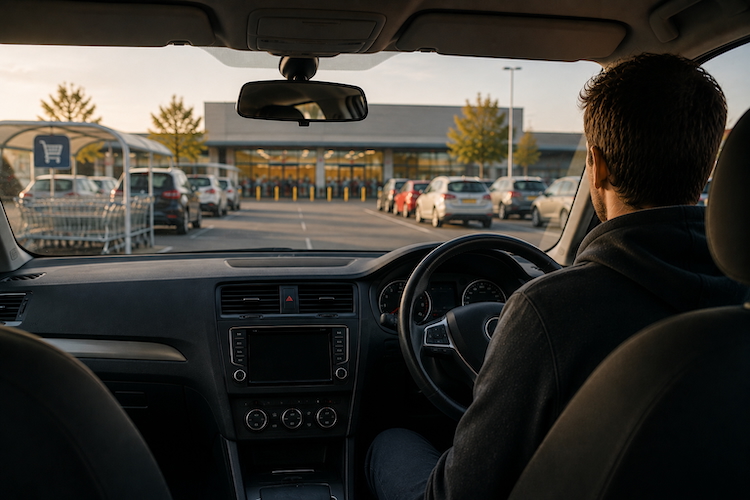
They may sit in the car before going inside, wondering whether today will be different. They might choose quieter times to shop, park close to the entrance, avoid certain aisles, or plan the quickest route through the store. These strategies often make sense because they provide a feeling of control and reduce uncertainty.
The difficulty is that, over time, the supermarket itself can begin to feel unsafe.
Not because the supermarket is dangerous.
Because of what the person fears might happen while they are there.
When a simple shopping trip becomes overwhelming
Imagine someone entering a supermarket intending to buy a few groceries. At first, everything feels normal. Their attention is on their shopping list, the items they need, and completing the task.
Then something changes.
They notice their heart beating faster. Their breathing feels different. They become aware of a feeling of discomfort in their body. They may feel lightheaded, disconnected, or suddenly overwhelmed.
Their mind begins searching for an explanation.
“What is happening to me?”
“Am I about to panic?”
“What if I cannot get out?”
“Can people tell something is wrong?”
Their attention shifts away from the supermarket and towards themselves. Instead of focusing on what they came to buy, they begin monitoring their body for signs that anxiety is increasing.
They check their breathing. They notice their heart rate. They scan for symptoms. They start evaluating whether they can continue or whether they need to leave.
The supermarket has not changed.
Their experience of the supermarket has changed.
Anxiety is a threat prediction system
Anxiety is the brain’s threat detection system. Its purpose is to identify potential danger and prepare the body to respond.
When the brain detects a threat, the body activates a protective response. Heart rate increases, breathing changes, muscles tense, and attention becomes focused on survival. This response is incredibly useful when there is genuine danger.
The difficulty is that anxiety does not only respond to what is happening in the present moment. It also responds to what the brain predicts might happen.
“Anxiety is not always a response to danger. Sometimes it is a response to the possibility of danger.”
For someone experiencing anxiety in a supermarket, the feared event is often not the supermarket itself. It is the possibility of panic, losing control, feeling trapped, becoming embarrassed, or being unable to cope.
The brain begins preparing for a threat that has not occurred.
The body responds as though the threat is already present.
When sensations become frightening
One of the most difficult aspects of anxiety is that the physical sensations themselves can become the source of fear.
A racing heart may be interpreted as:
“Something is wrong.”
Dizziness may become:
“I might collapse.”
A feeling of panic may become:
“I cannot handle this.”
The physical sensations are real. The interpretation of those sensations may not be accurate.
This can create a cycle where anxiety becomes increasingly self-reinforcing. A person notices a sensation in their body, interprets it as threatening, experiences more fear, and then notices stronger sensations as the body responds.
The person becomes afraid not only of the situation, but of their own internal experience.
The question changes from:
“Is this place safe?”
to:
“Can I cope if I become anxious here?”
Why supermarkets can feel particularly difficult
Many people who experience supermarket anxiety are not afraid of supermarkets.
They are afraid of experiencing anxiety in a place where they feel they cannot easily regain control.
Supermarkets contain several features that can challenge an anxious nervous system. They may involve crowds, noise, bright lights, queues, uncertainty about how long the task will take, and the feeling of being unable to leave immediately.
For someone whose nervous system is already sensitive to threat, these features can become cues that something is wrong.
The deeper fear is often not:
“I am unsafe here.”
It is:
“I do not know if I can handle this if my anxiety increases.”
That distinction is important because it changes the focus. The goal is not necessarily to make the environment different. It is to help the person develop confidence in their ability to experience discomfort without being overwhelmed by it.
Why avoidance feels helpful but can maintain anxiety
When anxiety becomes intense, leaving the supermarket often brings immediate relief.
The brain notices this.
It learns:
“I felt better because I escaped.”
This is a powerful learning experience. The problem is that the brain may also learn:
“The supermarket was dangerous.”
Avoidance is not a sign of weakness. It is the nervous system attempting to protect the person from distress.
However, protection can sometimes become restriction.
The more a person avoids situations that trigger anxiety, the fewer opportunities they have to discover that they can cope. The brain does not get the chance to learn:
“I experienced anxiety, and I was still safe.”
Changing the relationship with anxiety
The goal of anxiety treatment is not to eliminate every uncomfortable feeling.
In fact, constantly trying to prevent anxiety can unintentionally reinforce the belief that anxiety itself is dangerous.
A more helpful goal is developing confidence:
“I can experience anxiety and still continue.”
This does not mean forcing yourself into situations that feel overwhelming. Effective treatment involves gradual, manageable experiences that allow the brain to learn something new.
Anxiety can be uncomfortable without being harmful.
A racing heart does not mean something is wrong.
A feeling of panic does not mean you are losing control.
A difficult moment does not mean you need to escape.
Strategies for managing supermarket anxiety
One of the most important shifts is changing the goal.
Many people enter a supermarket thinking:
“I need to make sure I do not panic.”
This creates pressure and communicates to the brain that panic would be dangerous.
A more helpful approach is:
“I may experience anxiety, but I can still do what I came here to do.”
The aim is not perfect comfort.
The aim is confidence.
Gradual exposure can help the brain develop new learning. This might involve entering a supermarket briefly, shopping during a manageable time, completing a small task, and gradually increasing the challenge over time.
The purpose is not to overwhelm yourself.
It is to create experiences where your brain learns:
“I felt anxious, and I was still okay.”
It can also be helpful to shift attention outward. Anxiety often causes people to become highly focused on their internal experience, monitoring every sensation and evaluating whether they are getting worse.
Returning attention to the environment can interrupt this cycle. Notice what is around you. Focus on the task you are completing. Allow yourself to be present in the environment rather than constantly checking whether anxiety is increasing.
The aim is not to distract yourself from anxiety.
It is to teach your brain that anxiety can exist while you continue living your life.
When ordinary places feel safe again
Recovery from anxiety is not about reaching a point where uncomfortable feelings never appear.
Anxiety is part of being human. It appears during uncertainty, stress, change, and moments when something matters.
The goal is to build trust in yourself.
To know that you can feel anxious without being controlled by anxiety.
You can experience discomfort without needing to escape.
You can allow your nervous system to sound an alarm without assuming there is danger.
Sometimes the most important shift is not making anxiety disappear.
It is learning that anxiety can be present while you continue to live your life.