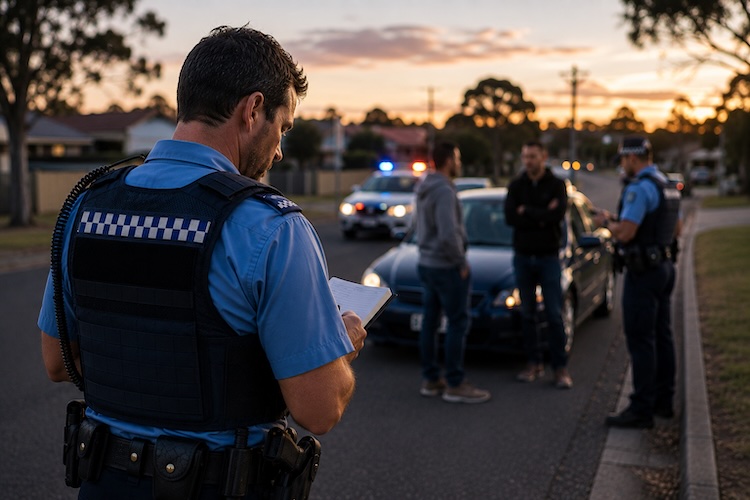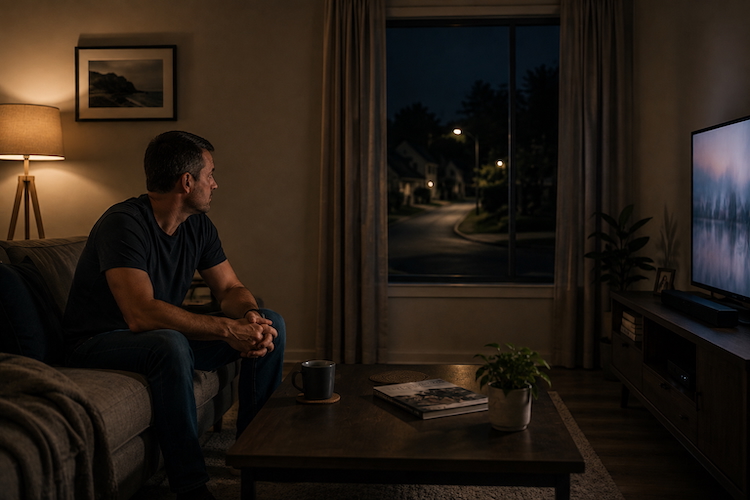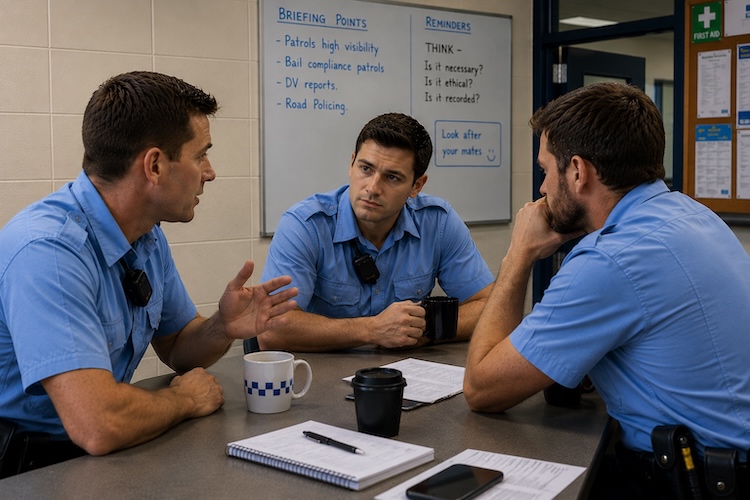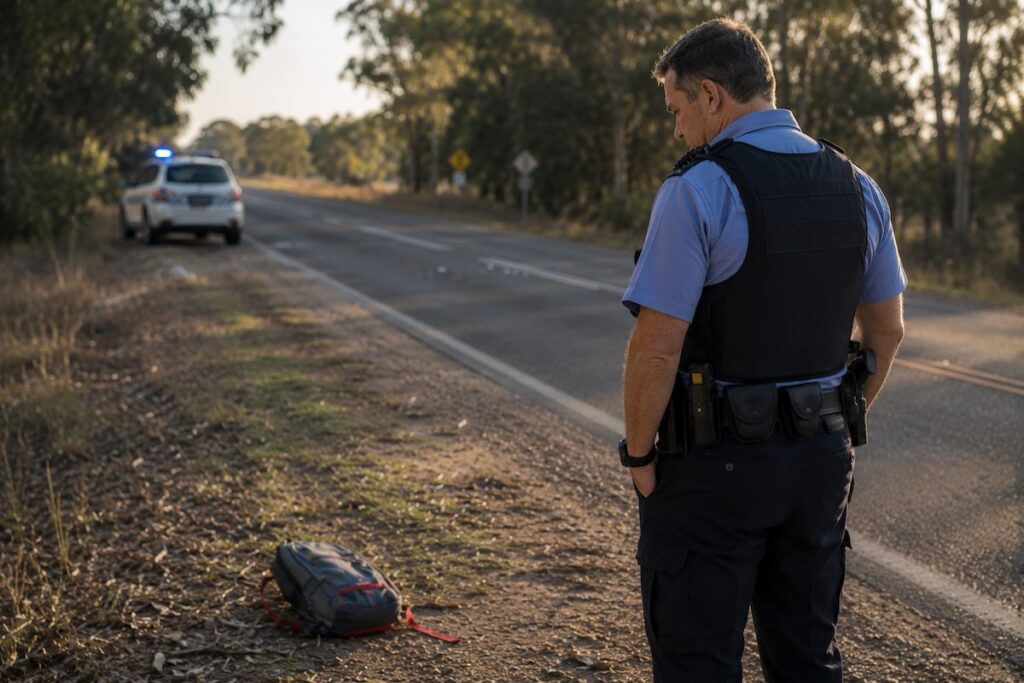
There is a particular way police officers can talk themselves out of taking their own reactions seriously.
I’ve seen worse.
The job has stayed with them. Sleep is different. They are shorter with people at home. An image returns unexpectedly, or they find themselves avoiding something they previously would not have thought twice about. Perhaps they simply feel unsettled in a way that is difficult to explain.
But almost immediately, another memory appears for comparison.
That fatal was worse.
I’ve seen kids in worse situations.
Other coppers have dealt with much more than this.
And suddenly the question is no longer “Why has this stayed with me?”
It becomes “Why am I struggling with this when I’ve handled worse?”
It is an understandable question, particularly in policing. Over a career, officers can accumulate an extraordinary catalogue of experiences: serious assaults, suicides, sudden deaths, horrific crashes, injured children, violence, grief and people encountering some of the worst moments of their lives. Against that history, being affected by an incident that seems less confronting can feel strangely inconsistent.
That inconsistency can become part of the problem. Instead of seeing their reaction as something worth understanding, the officer begins seeing it as evidence that something is wrong with them.
But this relies on an assumption about psychological trauma that does not quite hold: that the severity of our reaction should correspond neatly to the apparent severity of the event.
Human beings do not work that way.
Your brain doesn’t read the incident report
Operationally, it may be perfectly reasonable to say that one incident was worse than another. One involved greater injury, more danger, a more confronting scene or a more tragic outcome.
Psychologically, however, a different set of questions matters.
What did this particular experience mean to you?
A deceased person may resemble your child. A victim may be the same age as your partner. A frightened child at a scene may say something that stays with you because you are now a parent yourself. A suicide may occur while someone close to you is struggling. An incident may involve a kind of helplessness that is particularly difficult for someone whose professional identity has been built around being able to intervene.
Perhaps you arrived too late.
Perhaps you had to make a decision without enough information.
Perhaps the decision was entirely reasonable, yet you still find yourself wondering whether something different might have changed the outcome.
Sometimes what remains isn’t primarily what an officer saw. It is what they had to do, what they could not do, or what happened despite everything they did.
There can also be experiences involving moral conflict. Something may have been lawful, procedurally correct and professionally necessary while still being difficult to reconcile emotionally. An officer may understand perfectly well why something happened and remain troubled by having been part of it.
These details might occupy only a line in an incident report, if they appear at all.
Psychologically, they can be the entire story.
The mind does not assign significance according to an operational hierarchy of seriousness. It responds to meaning, identification, helplessness, responsibility, surprise, previous experience and the circumstances in which the event occurred.
The worst thing you have seen is not necessarily the thing that will affect you most.
You are not the same officer at every job
There is another reason an incident can affect an officer differently from something objectively worse that happened years earlier.
The incident isn’t the only variable.
The officer has changed too.
A police officer attending a traumatic incident after a period of reasonable sleep, manageable workload and stability at home is not arriving with the same available capacity as that officer after months of overtime, poor sleep, occupational conflict, problems at home and several other confronting jobs.
The scene may be similar.
The person arriving at it is not.
This matters in policing because difficult experiences rarely occur according to a convenient psychological schedule. There isn’t necessarily time to recover from one before another arrives. An officer attends something confronting, finishes the shift, goes home, comes back and continues working.
Often the ability to continue is taken as evidence that the previous experience has been dealt with.
Sometimes it has.
Sometimes the officer has simply become very good at continuing.
Those are not quite the same thing.
Over years of policing, experiences can accumulate without producing an obvious point at which someone stops functioning. In fact, many officers continue functioning extremely well. They work, make decisions, support colleagues, attend the next job and manage the practical demands of life outside work.
Then something gets through.
The final incident may not seem significant enough to explain what follows. The officer knows this, which makes the reaction even easier to dismiss.
But the incident that brings something to the surface does not necessarily account for everything that has accumulated underneath it.
Sometimes a relatively ordinary job occurs in the context of years of exposure, reduced sleep, personal stress, previous losses and a capacity that is already stretched. The latest incident matters, but it may be only one part of the explanation.
This is why asking “Was this job bad enough to cause this reaction?” can be the wrong question.
A better question may be:
“What was already being carried when this happened?”
“Everyone else seems fine”
Police officers have another comparison available that most people do not.
The other officers who were there.
They saw it too.
And they appear fine.
If several officers attend the same fatality and only one is having nightmares afterwards, it is easy for that officer to conclude that the difference must be something deficient in them.
But shared attendance does not mean shared experience.
Two officers can stand metres apart at the same scene and encounter it differently. One may have direct contact with the victim while another manages traffic. One may perform CPR. Another may speak with the family. One may witness a particular detail that the others never see. One may feel responsible for a decision or spend the following weeks wondering whether something could have been done differently.
Even if their operational exposure were identical, their personal histories would not be.
One officer may have children the same age as the victim. Another may have experienced a recent bereavement. Someone may be going through a relationship breakdown, caring for an unwell parent, sleeping badly or already carrying the effects of previous incidents.
The same event does not land on the same history.
There is another obvious problem with using colleagues as a benchmark in a profession where people can become exceptionally good at appearing fine.
You may not actually know how they are doing.
The hierarchy of deserving to struggle
Comparison can gradually become more than an attempt to understand why something affected us. It can become a rule about who is entitled to be affected at all.
Other people had it worse.
The family are the real victims.
I wasn’t injured.
I only attended afterwards.
I knew what I was signing up for.
Other coppers have been to much worse jobs.
Every one of those statements may contain some truth.
None determines whether an experience affected you.
Police officers understandably distinguish their experience from that of victims and families. That perspective matters. An officer attending somebody else’s tragedy is not experiencing the same loss as the parent whose child has died or the person whose partner has been killed.
But recognising that difference does not require pretending that repeated exposure to other people’s worst moments has no psychological consequence.
Acknowledging that something affected you doesn’t mean claiming that you suffered most.
It simply means it affected you.
There is no competition that needs to be won before a psychological response becomes worthy of attention.
When comparison becomes avoidance
There is another reason “I’ve seen worse” can be such a compelling thought.
It ends the conversation.
If the incident wasn’t bad enough to justify the reaction, there is no reason to examine the reaction any further. The nightmares can be dismissed. Irritability becomes tiredness. Avoiding a location becomes preference. Drinking more after shifts remains unrelated. Emotional distance at home becomes work stress. The recurring image is something that will eventually go away if you stop giving it attention.
Comparison provides a rational argument against curiosity.
This can be particularly attractive in policing because putting feelings aside is sometimes necessary. An officer may encounter something distressing and still need to make decisions, communicate clearly, manage other people and attend another job.
Emotional containment in that moment isn’t necessarily avoidance.
It can be professionalism.
The difficulty arises when putting something aside for now becomes never returning to it.
An officer can become so accustomed to asking whether their reaction is justified that they never ask what the reaction might actually be telling them.
Perhaps sleep has deteriorated.
Perhaps certain images arrive without invitation.
Perhaps you’re avoiding a particular road, suburb, type of job or conversation.
Perhaps you are more easily startled or constantly scanning your surroundings.
Perhaps your patience at home has become unusually short.
Perhaps you feel detached from people you care about.
Perhaps alcohol has become more important because it makes switching off easier.
Perhaps nothing dramatic is happening at all. You simply don’t feel quite like yourself.
The useful question doesn’t necessarily have to be “Do I have PTSD?”
It might simply be:
“When did this start?”
“What has changed?”
“What about this particular experience stayed with me?”
Those questions invite understanding rather than judgement.
Being affected is not the same as having PTSD
Not every difficult police experience causes PTSD. Most do not.
People can experience distressing memories, disrupted sleep, increased vigilance, irritability or emotional reactions after a confronting incident and recover without developing post-traumatic stress disorder. Being affected by something is not itself a diagnosis.
That distinction is important because the term trauma can sometimes become so broad that any distressing experience is treated as evidence of PTSD.
But the opposite mistake matters too.
An officer does not need to meet the criteria for PTSD before a change in their psychological functioning deserves attention.
There is a considerable amount of territory between “I’m completely fine” and “I have PTSD.”
Recognising that a job has affected you does not commit you to a diagnosis. It doesn’t mean you cannot do your job, that you are psychologically damaged, or that the reaction will be permanent.
It simply allows you to respond to what is actually happening rather than what you believe should be happening.
Experience does not make you impermeable
There can be an unspoken expectation that experienced police officers should become progressively less affected by what they encounter.
Experience certainly changes people. Situations that might overwhelm a recruit can become familiar. Procedural confidence develops. Officers learn where to direct their attention, what needs to happen next and how to function effectively around scenes that once would have been confronting.
But experience does not make someone psychologically impermeable.
In some ways, a longer career means there is simply more history for a new experience to encounter.
The officer attending a fatal crash at 45 is not the same person who attended one at 22. They may now have children. They may have experienced bereavement themselves. They may understand family loss differently. They may have accumulated hundreds of memories involving injury, death and distressed families. They may be carrying occupational or personal stresses that did not exist earlier in their career.
The incident may look familiar.
Its meaning may be completely different.
This is why judging today’s response against an earlier version of yourself can be another form of comparison.
I used to handle this stuff.
Perhaps you did.
But the goal isn’t to prove that today’s response is identical to the one you would have had fifteen years ago.
It is to understand the officer who attended the job today.
You don’t need to prove it was bad enough
If an experience keeps returning, something about it matters.
That doesn’t tell us what the diagnosis is. It doesn’t tell us how long the response will last. It doesn’t mean an officer cannot continue doing their job or that they have been permanently changed.
It gives us a reason to become curious rather than dismissive.
There may be one particular detail that needs talking about. There may be cumulative exposure that has never really been considered. There may be guilt, helplessness or responsibility attached to the event. The incident may have connected with something personal. Or it may simply have happened at a point when the officer had less capacity available than they normally would.
Understanding that is much more useful than trying to establish whether somebody else would have been more entitled to struggle.
Because there will almost always be something worse.
Another job. Another officer. Another tragedy. Another person who appears to have carried more without being affected.
If worse becomes the standard against which we decide whether our own response deserves attention, there is almost no experience that will ever qualify.
You don’t need to win a competition in suffering before you’re allowed to notice that something has affected you.
So the next time the thought appears—
“I’ve seen worse.”
—it may be worth adding one more sentence.
“But this is the one that’s stayed with me.”