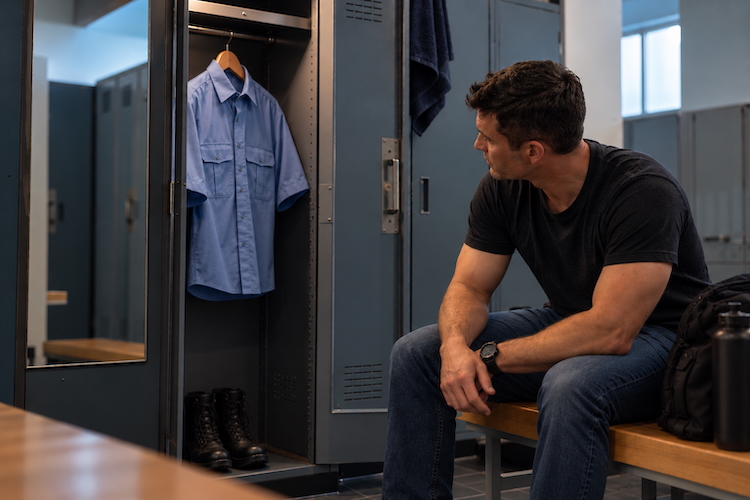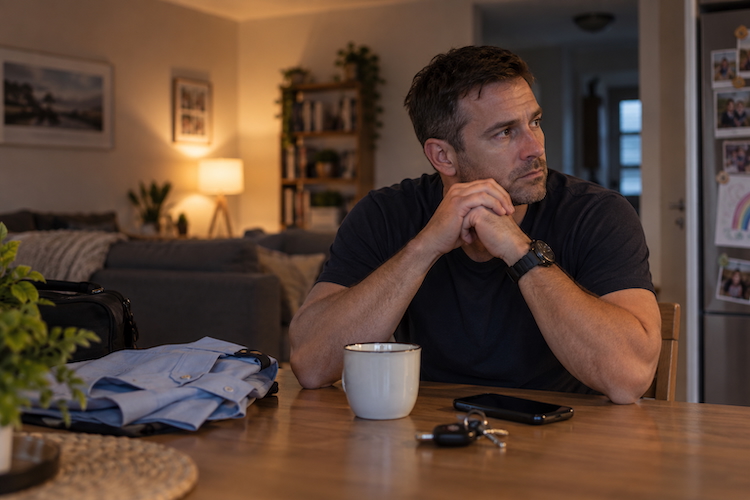



For police officers and other first responders, noticing what other people miss can be part of staying safe.
At work, attention is rarely passive. You notice the vehicle that has passed twice, the person whose behaviour does not quite fit the situation, the movement at the edge of a crowd, the sudden change in someone’s tone or the hands you cannot clearly see. Experience teaches you to read environments quickly because, occasionally, the small detail really does matter.
Over time, this kind of attention can become remarkably efficient. The brain learns what deserves priority and begins detecting possible problems before conscious thought has fully caught up.
That is useful when the job requires it.
The difficulty is that the end of a shift does not necessarily switch the system off. An officer can leave the station, change clothes and return home while part of their attention remains on duty.
Vigilance is not necessarily a problem
Hypervigilance is often described as excessive alertness to possible danger. In first responders, however, it is important not to pathologise every form of heightened awareness.
Some occupational vigilance is adaptive.
Police officers, paramedics, firefighters and other emergency workers repeatedly encounter situations where circumstances can change quickly. Uncertainty matters. Behaviour matters. Being surprised can have consequences.
With enough repetition, the nervous system becomes increasingly efficient at anticipating what might happen next. An officer may automatically notice exits when entering a building, prefer a seat that provides a view of the room, register who is walking behind them or pay unusual attention to someone’s hands.
Driving through town, they may notice vehicles, behaviours and potential hazards that everyone else in the car appears oblivious to.
Often, none of this feels like anxiety.
It simply feels like paying attention.
The more useful distinction is not whether someone notices potential threats. It is whether their vigilance remains flexible: can the system increase its attention when necessary and reduce it again when the situation no longer requires it?
The brain learns from the environment it repeatedly encounters
Our brains are constantly learning what deserves attention.
If someone spends years working in environments where apparently ordinary situations occasionally become dangerous, the nervous system receives a powerful lesson: do not assume that ordinary means safe.
Most traffic stops remain routine. Most suspicious movements lead to nothing. Most agitated people do not become violent. But occasionally something changes very quickly, and those experiences can have considerable learning power.
The brain becomes reluctant to dismiss uncertainty because it has learned that overlooking the wrong detail can matter.
This gradually shapes attention. Rather than simply noticing what is happening, the mind becomes particularly skilled at detecting what could happen.
That skill does not disappear simply because the uniform comes off.
What scanning can look like off duty
Off-duty vigilance is not always dramatic. It can become woven into ordinary behaviour so gradually that the person barely notices it.
At a restaurant, an officer may instinctively choose the chair facing the entrance. In a shopping centre, they may track people moving around them without consciously deciding to do so. At a child’s sporting event, part of their attention may remain on the crowd rather than the game. In an unfamiliar environment, they may quickly register exits, unusual behaviour and where other people are positioned.
Some find sudden noises particularly difficult to ignore or dislike having people behind them. Others continually notice behaviours that prompt an automatic internal question: What’s he doing? Why is that person standing there? What am I missing?
None of these behaviours, by themselves, means something is wrong.
The question is whether scanning remains a professional skill that can be used when needed, or whether it has become a state that follows the person everywhere.
The cost of never fully standing down
Vigilance requires energy.
When part of the brain remains occupied with monitoring the environment, some attention is continually being allocated to detection, assessment and preparation. A person can therefore appear to be relaxing while their attention is still doing work.
This helps explain why some first responders can spend an evening on the couch without feeling particularly restored. They may go to a restaurant, attend a family event or take a holiday and still find themselves monitoring what is happening around them. Busy environments can feel surprisingly tiring even when nothing stressful actually occurs.
There can also be a physical cost. Persistent activation may be accompanied by muscle tension, irritability, disrupted sleep, heightened startle responses or a general sense that the body never quite settles.
People often describe this as being unable to “switch off”.
Sometimes that description is quite accurate. The person has physically left work, but the attentional system developed for work is still operating.
When occupational scanning enters relationships
One of the less obvious effects of occupational vigilance is that the same pattern-detection skills can sometimes migrate into relationships.
First responders often become very good at noticing inconsistencies. At work, a change in tone, an unusual explanation, hesitation or a mismatch between someone’s words and behaviour may contain important information.
That habit of asking “What am I missing?” can be professionally valuable.
At home, however, the same question can operate differently.
A partner seems quieter than usual. A message is shorter than expected. Someone’s expression changes during a conversation. There is a slight hesitation before an answer.
For most people, these moments contain ambiguity. For a mind extensively trained to investigate inconsistencies, ambiguity can feel like something requiring explanation.
This does not mean police work inevitably makes people suspicious of their partners. Nor does it mean those observations are always inaccurate. The issue is whether the mind can tolerate not investigating every discrepancy it detects.
Sometimes a shorter message is simply a shorter message.
The professional skill is noticing the inconsistency.
The off-duty skill may be recognising when it does not require investigation.
Why “just relax” rarely works
Telling someone to relax assumes vigilance is entirely a conscious choice.
Often it isn’t.
The nervous system has learned through thousands of repetitions that monitoring the environment is useful. It has been rewarded for noticing things early and, occasionally, protected by doing so. Asking that system to simply stop because the person is now at home ignores how deeply repeated learning can shape attention.
The goal is therefore not to become less observant or to erase years of professional conditioning.
It is to develop greater flexibility.
The issue is not that the system can scan. It is whether it can recognise when scanning is no longer required.
Learning to notice when attention has gone back to work
A useful starting point is simply recognising when occupational attention has appeared in an ordinary environment.
An officer might notice:
I’m watching everyone who comes through the door.
I’m listening to the conversation behind me.
I’ve been tracking that person for the last few minutes.
Everyone else is watching the game and I’m watching the crowd.
The purpose is not to criticise the behaviour or immediately force it to stop. It is to create a distinction between the environment requiring vigilance and the nervous system automatically providing it.
A useful question can be:
“Is there something here that actually requires a response, or has my attention simply gone back to work?”
There may occasionally be a genuine reason to remain alert. The aim is not to convince yourself that nothing bad could happen.
It is to become more accurate about when vigilance is useful.
Giving attention somewhere else to go
Trying not to scan can be surprisingly ineffective. Telling yourself “stop looking around” still leaves attention organised around the possibility of threat.
It can be more useful to deliberately give attention another task.
At dinner, that might mean returning fully to the conversation rather than continuing to monitor the room. At a child’s sporting event, it might mean deliberately following the game for the next few minutes. At home, it could mean becoming absorbed in cooking, music, exercise, a project or something else that holds attention without requiring environmental monitoring.
This is not about pretending that the world is completely safe.
It is about allowing neutral and positive information to compete for attention too.
People in first responder roles receive enormous amounts of practice noticing what is unusual, unpredictable or potentially dangerous. They may receive much less practice noticing something equally important:
Nothing requires action right now.
For a system trained around readiness, learning to recognise the absence of demand can itself become a useful skill.
Creating a transition between work and home
For some first responders, it helps to create a deliberate transition between operational and personal life.
There is no single routine that works for everyone. It might involve changing clothes, showering, exercising, walking the dog, listening to music during the drive home or spending a short period alone before joining family life.
What matters is not the particular activity so much as what it represents.
A transition creates a boundary between two environments that ask very different things of the nervous system.
At work, readiness may be necessary.
At home, the task may be presence.
Without some kind of transition, people can move physically from one environment to the other faster than their attention follows.
Rest is also a professional skill
First responders receive extensive training in what to do when something happens.
There is usually much less training in what to do internally when nothing is happening.
Yet recovery is not separate from performance. A nervous system that can reduce activation between periods of demand is better positioned to respond when vigilance is genuinely required again.
Sleep, exercise, social connection, hobbies, time outdoors and activities that fully absorb attention can all contribute to recovery. For some people, structured decompression after demanding shifts is particularly valuable.
The purpose is not to become permanently relaxed.
It is to recover the ability to move between states.
Vigilance when vigilance is needed.
Recovery when it isn’t.
When vigilance deserves more attention
Some occupational vigilance may remain part of a first responder’s life without causing significant difficulty. Choosing the seat facing the door or automatically noticing unusual behaviour does not, by itself, indicate a mental health problem.
It becomes more important to pay attention when vigilance begins taking something significant away from life outside work.
That might mean sleep is persistently disrupted, crowded environments become increasingly difficult, irritability is affecting relationships, the person cannot remain emotionally present with family, startle responses are pronounced or even objectively low-risk environments rarely feel restful.
The key issue is function and flexibility.
Can the person stand down when circumstances allow it, or does their system increasingly behave as though every environment requires readiness?
Persistent hypervigilance can occur alongside trauma-related difficulties, anxiety and accumulated occupational stress. When it begins interfering with everyday life, speaking with a psychologist or another appropriately qualified health professional can help identify what is maintaining the pattern and what might help.
The aim is not to remove the vigilance that helps someone do their job.
It is to restore greater choice over when that vigilance is active.
When the job keeps scanning
Years of first responder work can train the brain to notice what others miss. That capacity can be useful, protective and professionally valuable.
The difficulty begins when vigilance becomes the default rather than a response to genuine demand.
The goal is not to become less observant. It is to regain choice: to recognise when attention has gone back to work, to decide whether the situation actually requires it and, when it does not, to allow attention to return to the life happening in front of you.
Because being off duty is not only about leaving the workplace.
It is also about giving the nervous system permission to stand down.